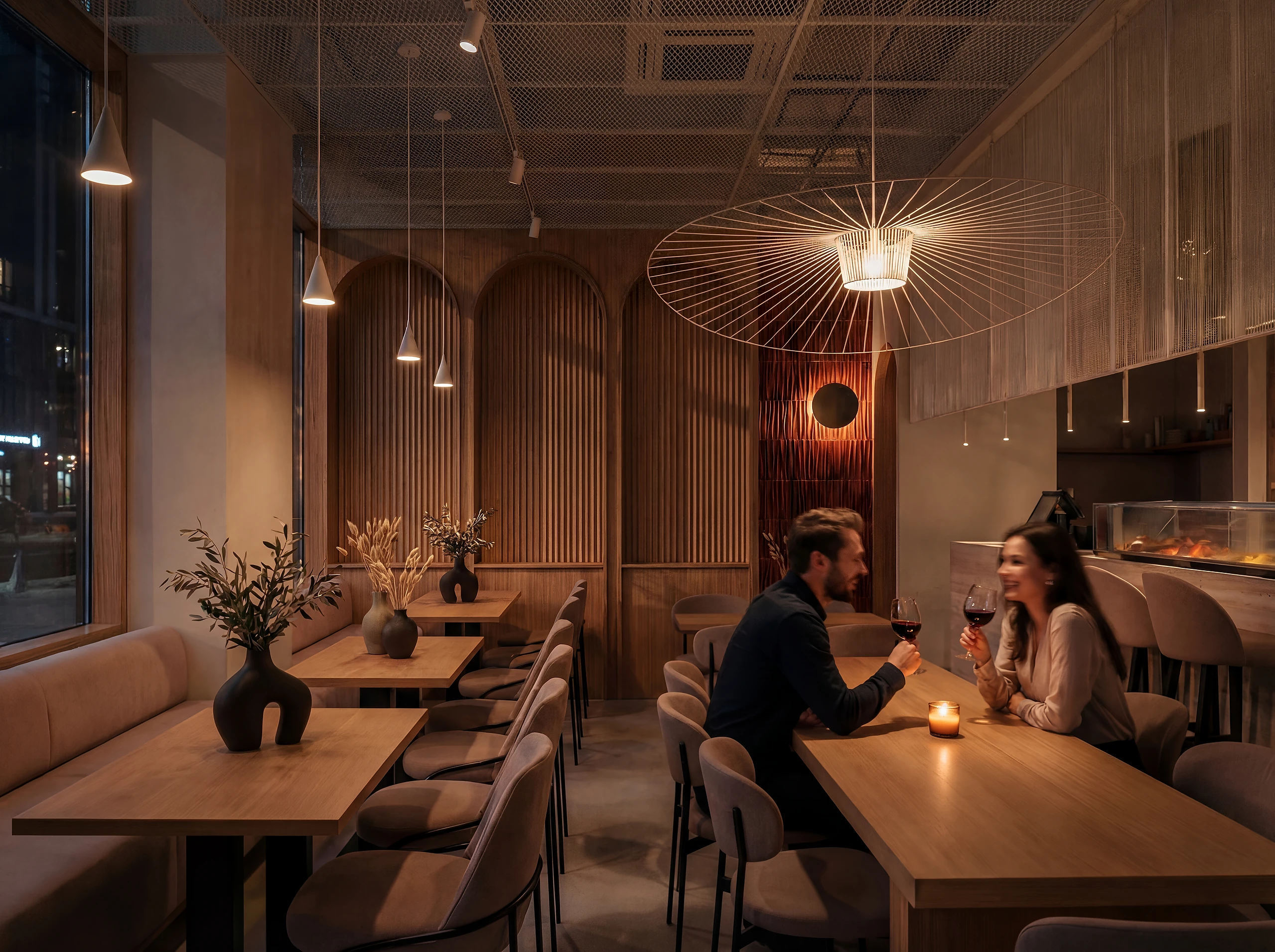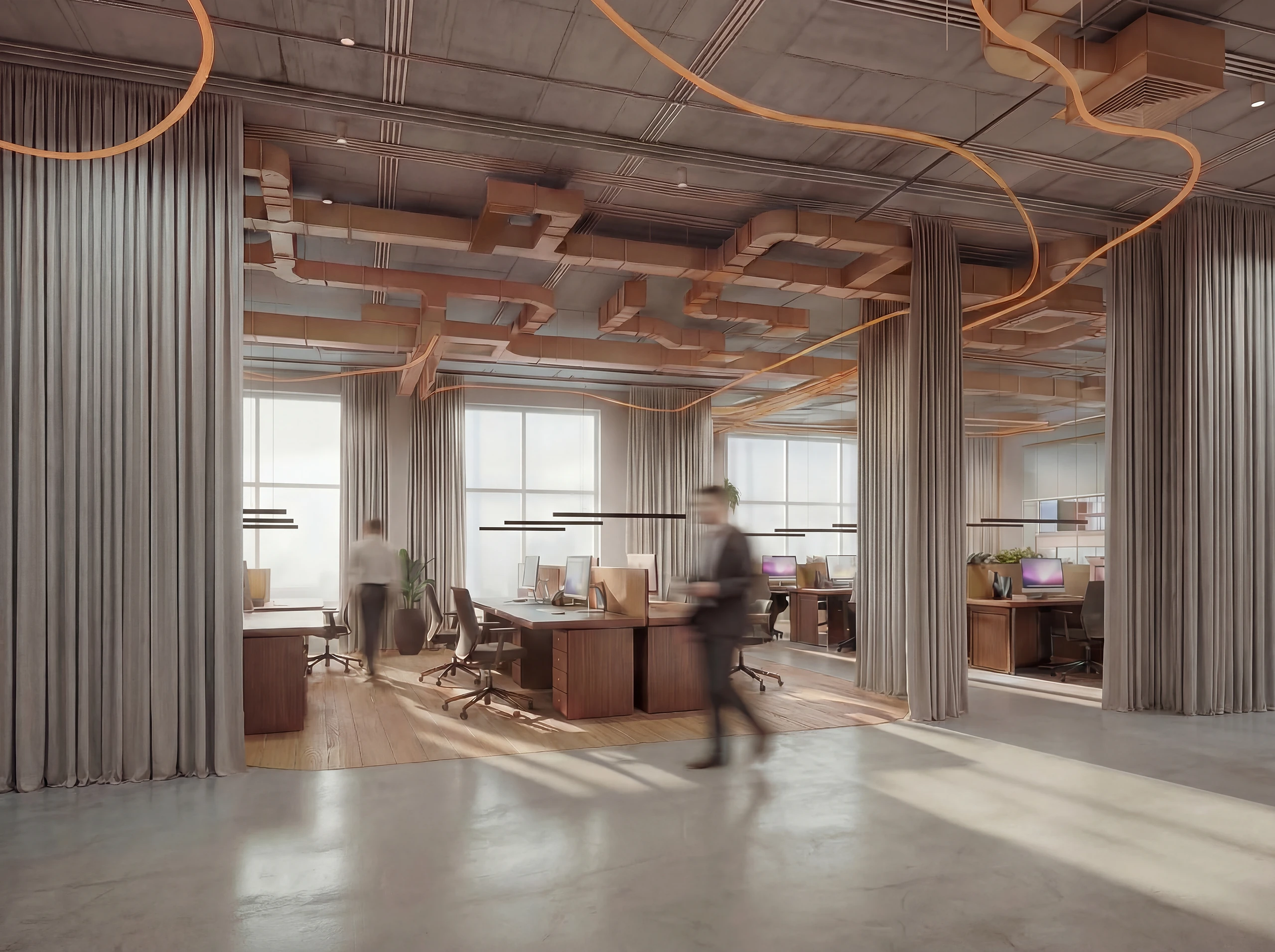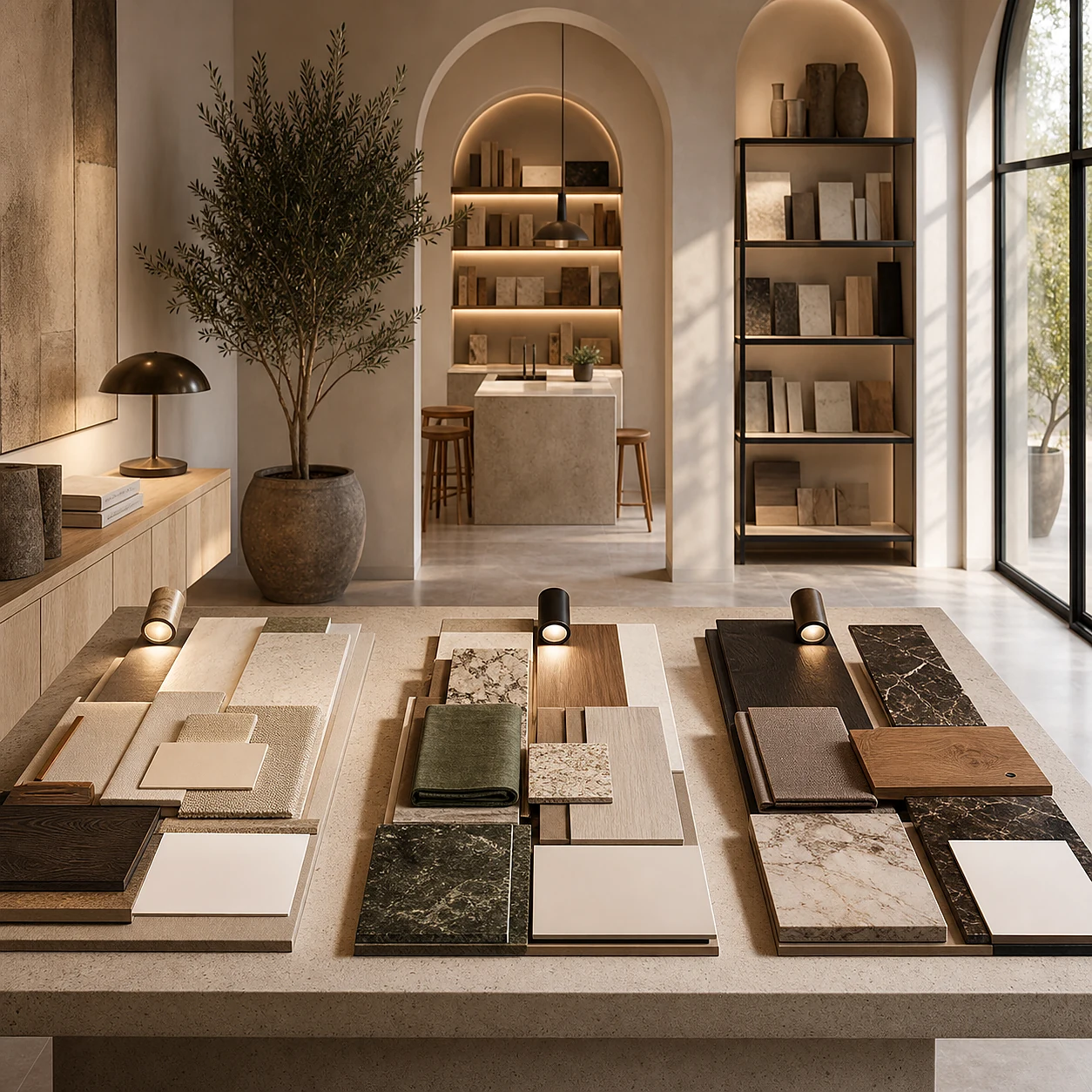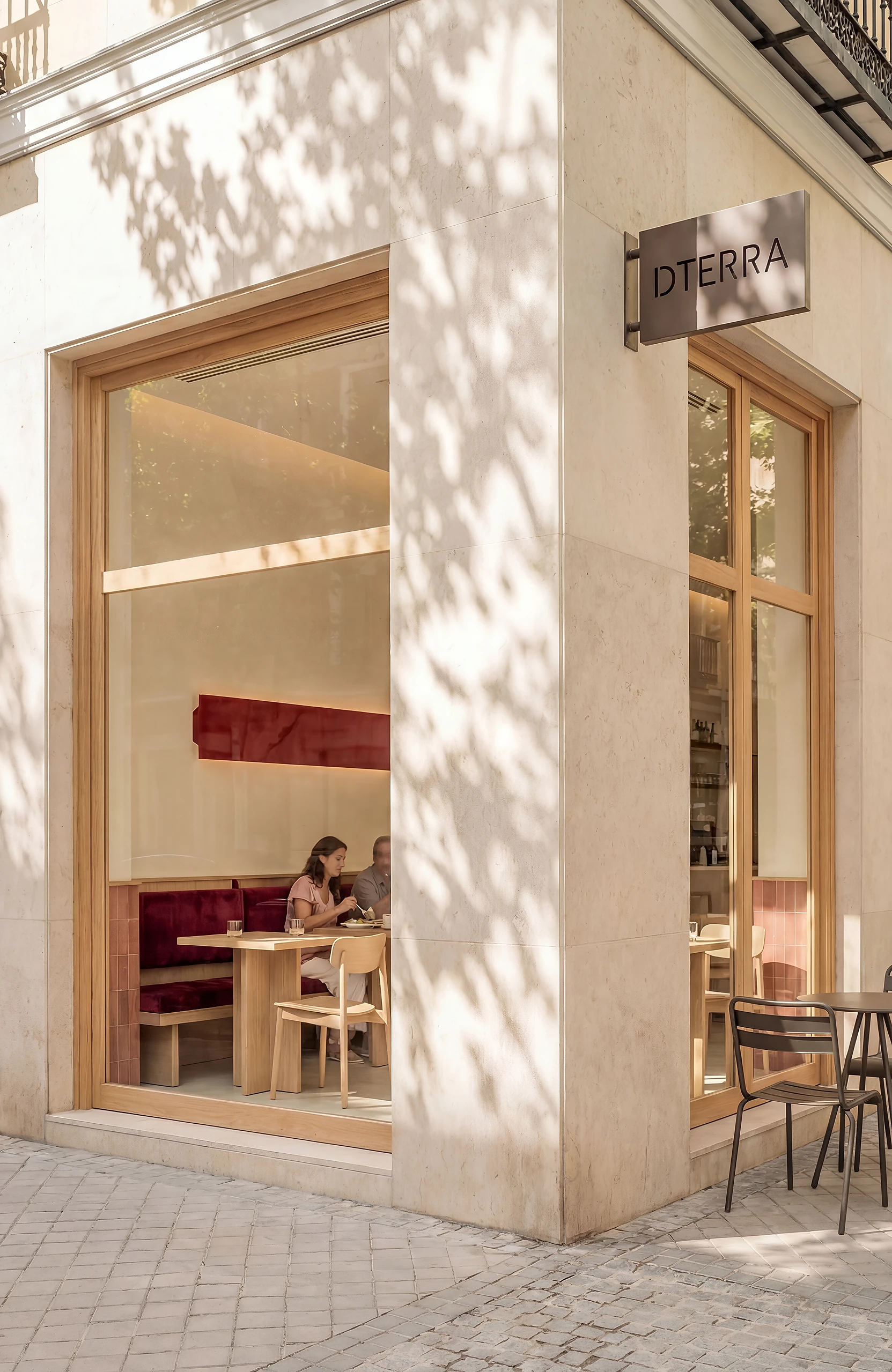
Walk into a space and you know, before anyone speaks, what kind of business it is and whether it is for you. The layout has already moved you. The light has already set the mood. The materials have already told you what it costs. None of that is decoration. It is the business, made physical.
This is why the argument about taste is usually the wrong argument. Two people can disagree about whether a colour is attractive and neither of them is wrong. Whether a counter is in the right place, whether the queue blocks the door, whether a customer can see the thing you most want them to buy, are questions with answers. Design that starts there stops being a matter of opinion.
What the space is actually doing
A commercial interior has jobs to do. It has to move people to the right place in the right order. It has to make the offer obvious. It has to hold up under a phone camera, because most people meet it as a photograph first. And it has to let staff work without friction. Decoration ignores these. Design starts from them.
Each of those jobs has a number behind it. Dwell time. Average spend. Covers per service. Conversion from a visit to a purchase. Staff hours lost to a layout that makes people walk further than they need to. You do not have to measure all of them to design well, but knowing which one the business is actually trying to move changes what the space should be.
Function decides the plan, not the mood board
The plan comes before the palette. Where people enter, where they pause, where they pay, where the queue forms, how the kitchen or the stockroom feeds the floor. Get the flow right and a modest budget feels considered. Get it wrong and the most expensive finishes cannot save it.
Plans fail in predictable places. The entrance that forces a decision before anyone has taken their coat off. The till positioned where the queue cuts the room in half. The service route that crosses the customer route at the busiest moment. A back of house too small for the trade the front of house is designed to do. None of these are visible in a mood board and all of them are visible on the floor plan, which is why the plan is where the money is made or lost.
The corollary is that a modest budget spent on the plan beats a large budget spent on surfaces. Moving a wall early costs a fraction of what it costs to work around it for ten years.
The room and the brand are one decision
A space says the same thing as the logo or it undercuts it. The material of the counter, the tone of the signage, the typeface on the menu all belong to one system. Decided together they compound. Decided separately they compete, and the customer feels the seam without being able to name it.
The seam is easiest to see in the details nobody assigns to anyone: the signage a contractor sourced, the menu a printer templated, the uniforms bought late, the music chosen by whoever opened up. Each was a small decision made without reference to the others, and together they are most of what a customer experiences.
How to tell design from decoration
Decoration is what a space looks like. Design is what a space does. If a choice cannot be traced to how the business runs or how it is meant to feel, it is decoration, and it is the first thing to cut. An EOLOS interior starts from the commercial question and works out to the finish, not the other way around.
A useful exercise before signing anything off: take each significant choice and write the reason next to it. Not the aesthetic reason, the operational one. If a line comes back blank it does not mean the choice is wrong, but it does mean nobody has to defend it, and those are the lines that should move first when the budget tightens.
The things a drawing has to survive
A commercial interior is used harder than any home. Trolleys hit the same corner every morning. A floor is cleaned with chemicals every night. A chair takes a hundred people a week. Surfaces chosen for how they photograph on day one rather than how they age are the most common source of regret, because the damage appears exactly when the opening budget has gone.
The criterion worth applying is replacement cost over five years rather than purchase price. A finish that can be repaired in sections, ironmongery rated for commercial use, and a paint that takes a touch up without redoing the whole wall are what keep a space looking deliberate in year three.
What happens after handover is part of the design
A space is handed to people who have to run it, and most of them were not in the design meetings. Where stock goes, how deliveries arrive, where waste sits, how the room is reset between services, who reaches the high shelf: these get answered on site one way or another, and if the design did not answer them the answer will be improvised and visible.
The practical fix is to design with the people who will operate the space, not only with whoever commissioned it. An hour with the person who opens up in the morning changes more plans than a week of references.