Coliving and Serviced Residences
We design coliving and serviced residences that maximise occupancy, justify higher rates and retain tenants. Design aimed at the performance of the asset, not at the aesthetics.
According to CBRE, Spain will reach 20,000 coliving beds by 2025, with an average occupancy of 93% and 75% of supply concentrated in Madrid and Barcelona. In such a market, the design of the space ceases to be an aesthetic decision and becomes the argument that differentiates your asset from the next in the search. We design coliving assets and serviced residences that fill faster, justify higher rates and retain tenants longer.
The real problem
A coliving without its own identity does not justify its price. And the tenant knows it.
The coliving tenant compares in seconds. If the space doesn't communicate something clearly, whether that is community, design or quality of life, they choose the cheapest. The rate is not supported by marketing. It's supported by space.
High tenant turnover
Tenants do not renew when the space does not exceed their expectations. The common areas, the room and the ambiance determine whether they stay or leave at the end of the lease.
Flat rate with no room to raise it
Without differentiation, the only argument is price. A well-designed asset competes on something other than price, and that is what holds the rate when a resident compares two options the same day.
Common areas that do not generate community
Coliving sells community, but poorly designed common areas do not create it. Layout, acoustics, lighting and flexibility of use are design decisions with direct impact on the product.
Reformed assets without operating criteria
Many operators refurbish existing buildings without adapting the layout to the coliving model. The result is a hybrid product that functions neither as residential nor as coliving.
Process
How we work
01The Appointment
We analyse the asset, the target tenant profile, the target rate and the direct competition in the area. The design is based on the business model, not on aesthetic references.
02The Design
Identity of the asset, distribution of common areas, typology of rooms, lighting and materials. Visualized in 3D before work begins.
03The Production
Executive drawings, material specifications, FF&E list and coordination with contractors. Budget closed before starting.
04The Installation
Construction management and supervision of finishes. Delivery with the asset ready to photograph and publish.
87%
Growth of coliving in Spain between 2020 and 2024, the second fastest growing country in Europe
20,000
Coliving beds projected in Spain for 2025 according to CBRE, more than double 2023
93%
Average occupancy of coliving assets in Spain, well above the traditional residential market
7.6 months
Average length of stay in coliving, a margin that is directly dependent on the quality of the space
What coliving operators ask us
What makes a shared area genuinely build community?
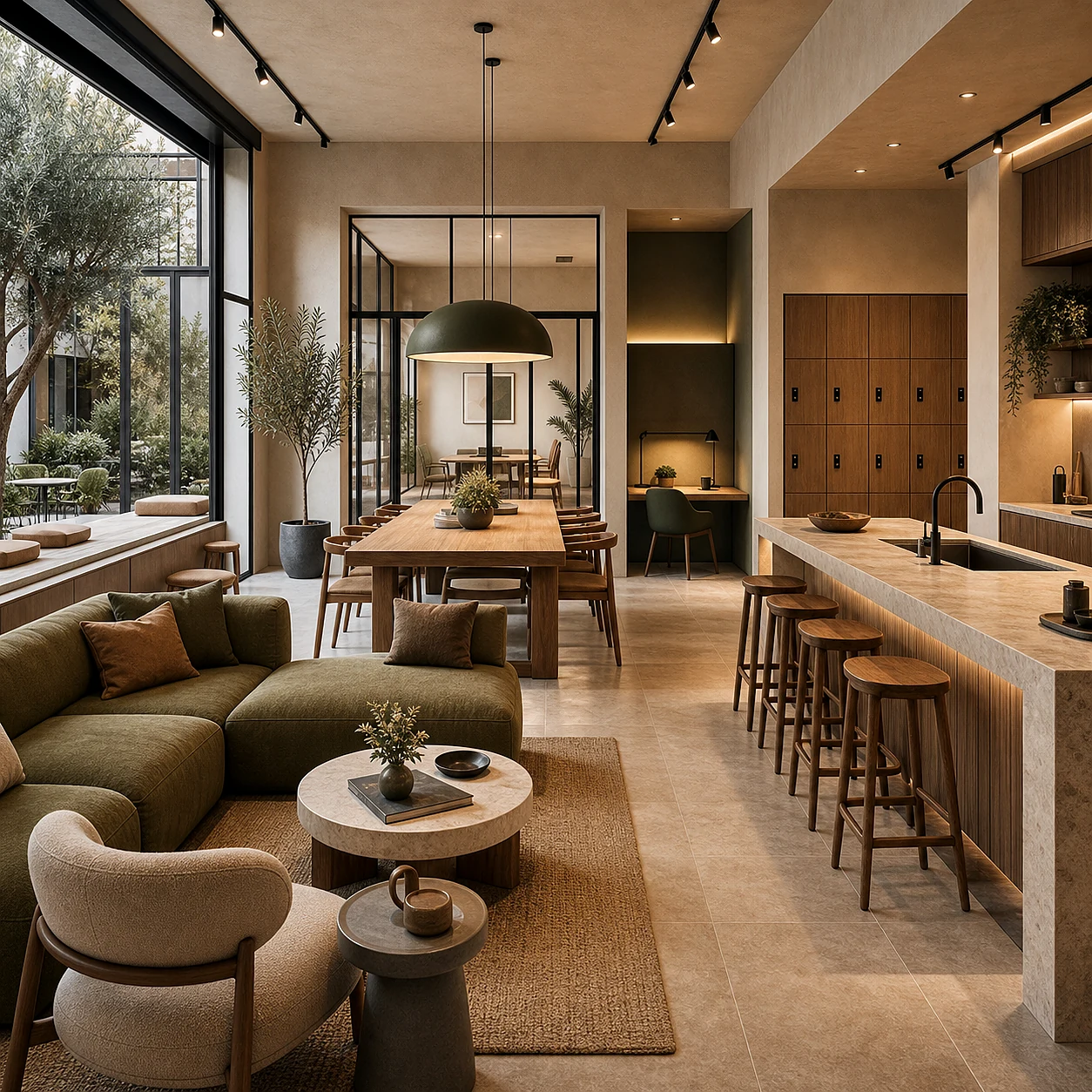
Having a specific use and a natural time of day. A multipurpose room with no function ends up empty. A shared kitchen with room for two people cooking at once, a long table that takes daytime work and evening dinners, and a lounge that is not on the through-route: those get used.
Can you raise the rate in coliving without enlarging the room?
Usually yes, because the decision to stay is made outside the room. Enough storage, acoustics between units, a laundry that does not create queues and shared areas that work hold the rate better than a few extra square metres in the private unit.
What goes wrong when a building is converted to coliving?
The building gets carved into rooms before anyone decides how it will be operated. Then the real problems appear: cleaning with no route of its own, waste with nowhere to go, maintenance crossing resident areas. We start from the operating model and draw afterwards.
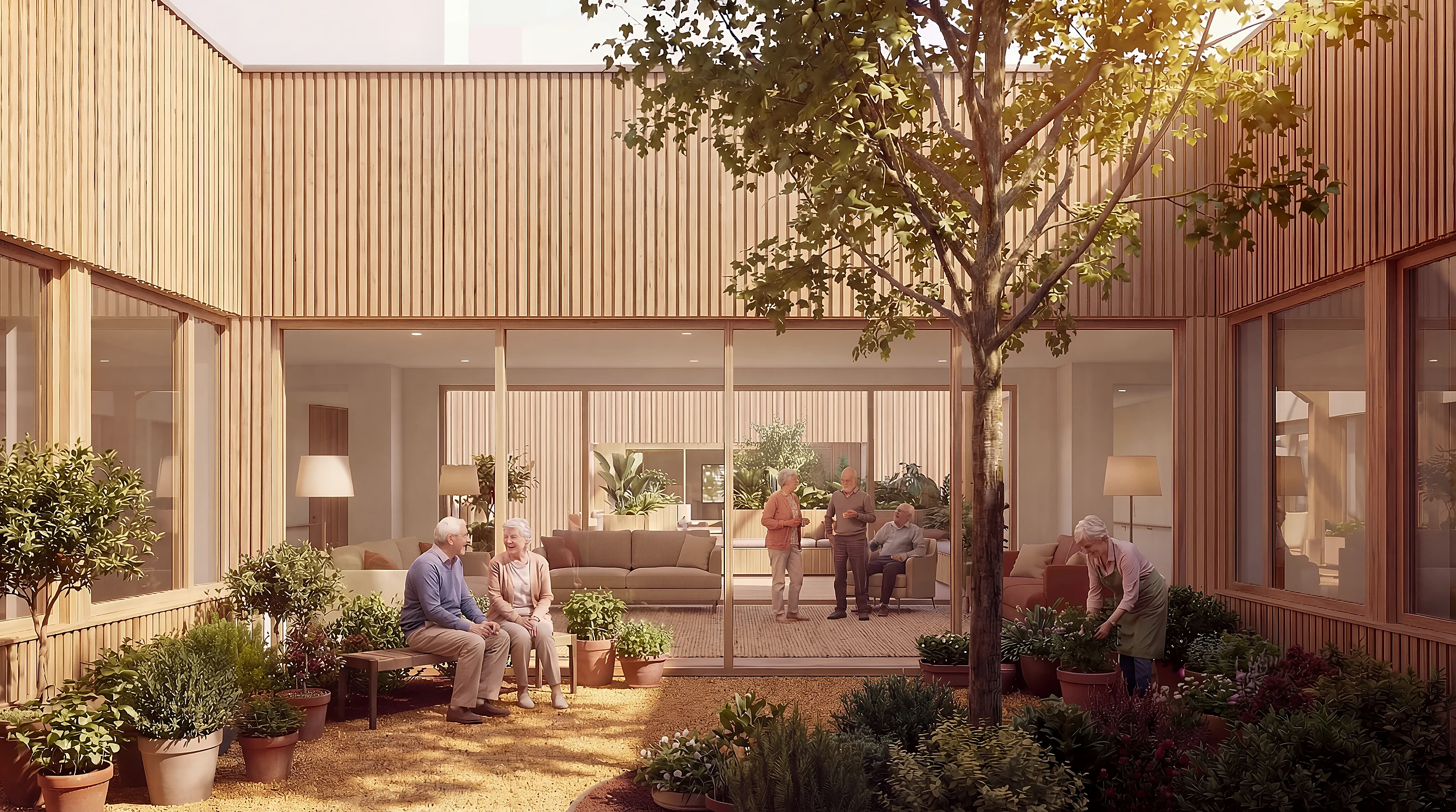
Do you also work on serviced and senior residences?
Yes, the Senior Coliving project is one example. The main shift is genuine accessibility rather than compliance alone, and a different relationship between private space and care: assistance has to be able to reach the resident without making them feel they live in an institution.