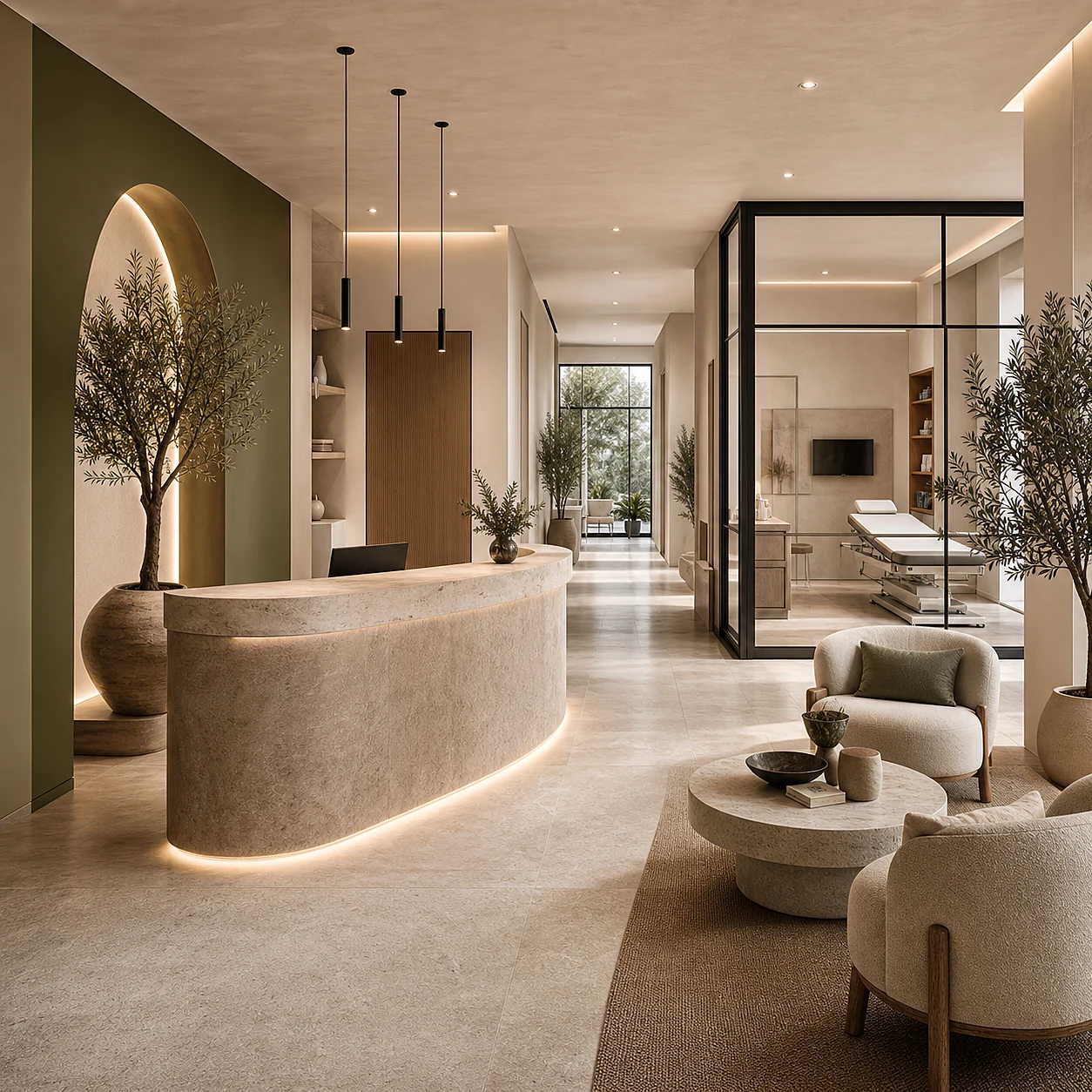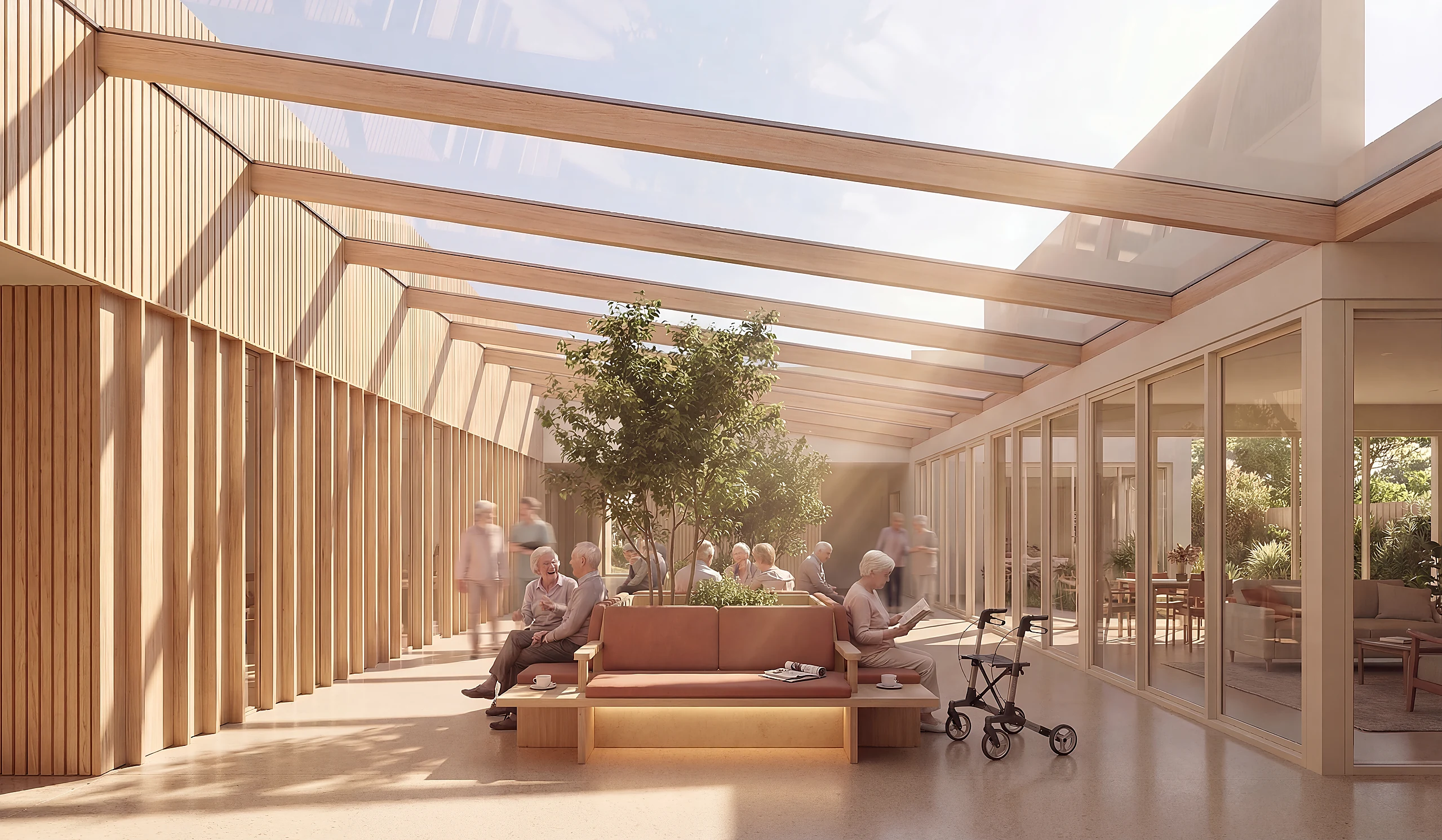
Wellbeing has a commercial argument that gets lost when it is presented as an ethical one. A restaurant with poor acoustics loses dwell time. A clinic with the wrong lighting loses trust before the consultation starts. An office with heavy air and no quiet loses the argument for coming in. A shop that is uncomfortable loses conversion. In each case the cost appears in the operating numbers, not in the design budget.
WELL is an international standard, which is the reason it is useful on projects that cross borders. It means the same thing to an operator in Dubai as to one in Stockholm, and it gives a client something checkable rather than a claim about good intentions.
What it covers
Air and climate. Ventilation, thermal comfort and zoning treated as part of the experience rather than as a service to be squeezed into a ceiling. It matters most in offices, clinics, hospitality and wellness, where people stay for hours and where the consequence of getting it wrong is a complaint nobody can quite articulate.
Light. Daylight where the plan allows it, and artificial light planned for the hours the space is actually used. The same room usually needs one logic in the morning and another at night, and a single setting is a compromise for both.
Acoustics. Sound decides how long a visitor stays, whether staff can work and what level of care the space appears to offer. It belongs in the plan and in the material selection, because retrofitting it after opening is expensive and rarely complete.
Materials. What is specified for durability, cleaning and low emission, and what that means for how a room ages. This is where wellbeing and commercial life expectancy turn out to be the same question.
How it runs inside a project
It is not a separate workstream with its own deliverable. The accreditation sits inside the team, so the decisions are shaped from the first brief rather than reviewed at the end. Where a client wants to pursue formal certification, the work is ordered around the priorities, the documentation and the spatial decisions that certification requires.
Where a client does not, the same thinking still applies and the benefit is the same. Most projects want the outcome rather than the plaque.