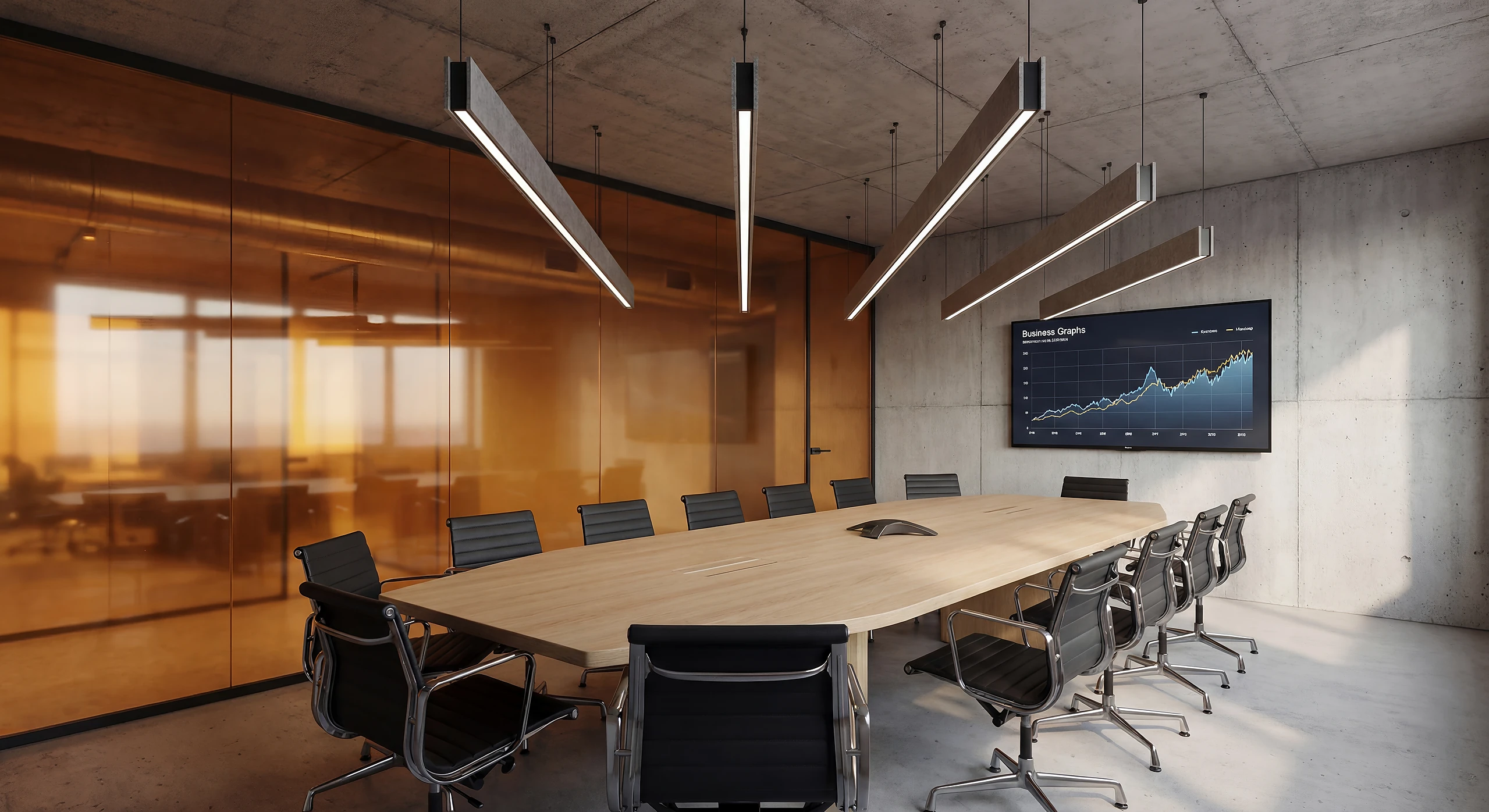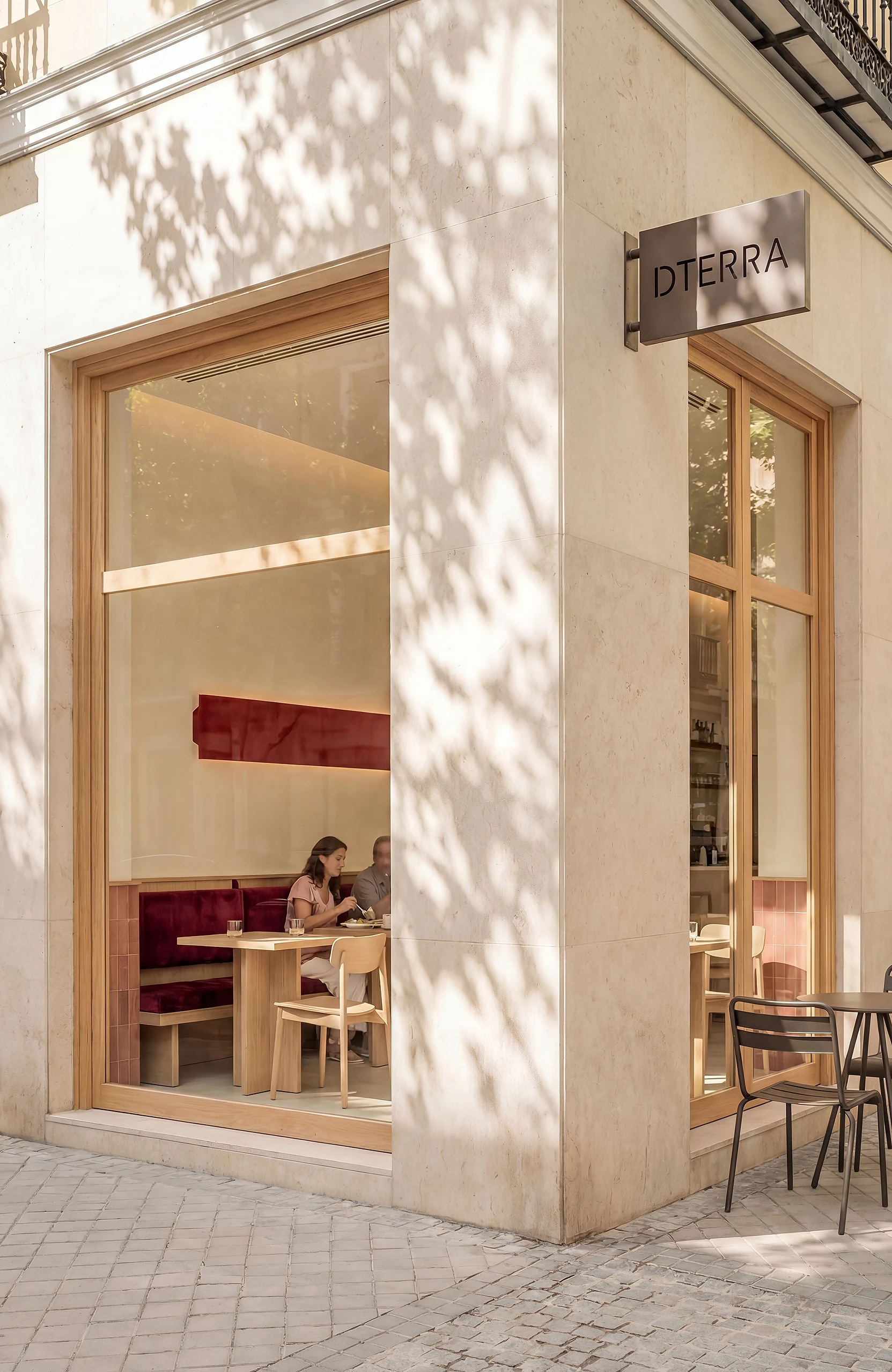
Visualization has quietly become a sales channel. Developers pre-sell apartments from images, hotels raise money from a concept, retailers sign a rollout from one reference room. The images do two jobs at once: they settle the design before the build, and they sell the space while it is still a plan.
The tools keep improving, but the thing that separates a rendering that sells from one that just looks nice has not changed. It is the decisions behind the picture.
The tooling question is the one clients ask first and it is the least interesting. Any competent studio can produce a technically convincing image now. What separates them is whether the image is answering a question somebody actually has, and whether what it shows will survive contact with the built result.
Honest light beats a pretty filter
The renders that convert are the ones a buyer can trust: real light at a real time of day, materials that will actually be installed, proportions that match the plan. A picture that oversells becomes a complaint on handover. The credibility of the image is the point.
Honest does not mean flat. It means the flattering choices are the ones you can keep: the hour of day when the room genuinely looks like that, a sky that matches the orientation, furniture at the scale and quantity that will actually be there. Adding a tree that planning will not allow, or light from a direction the building does not face, is borrowing against handover.
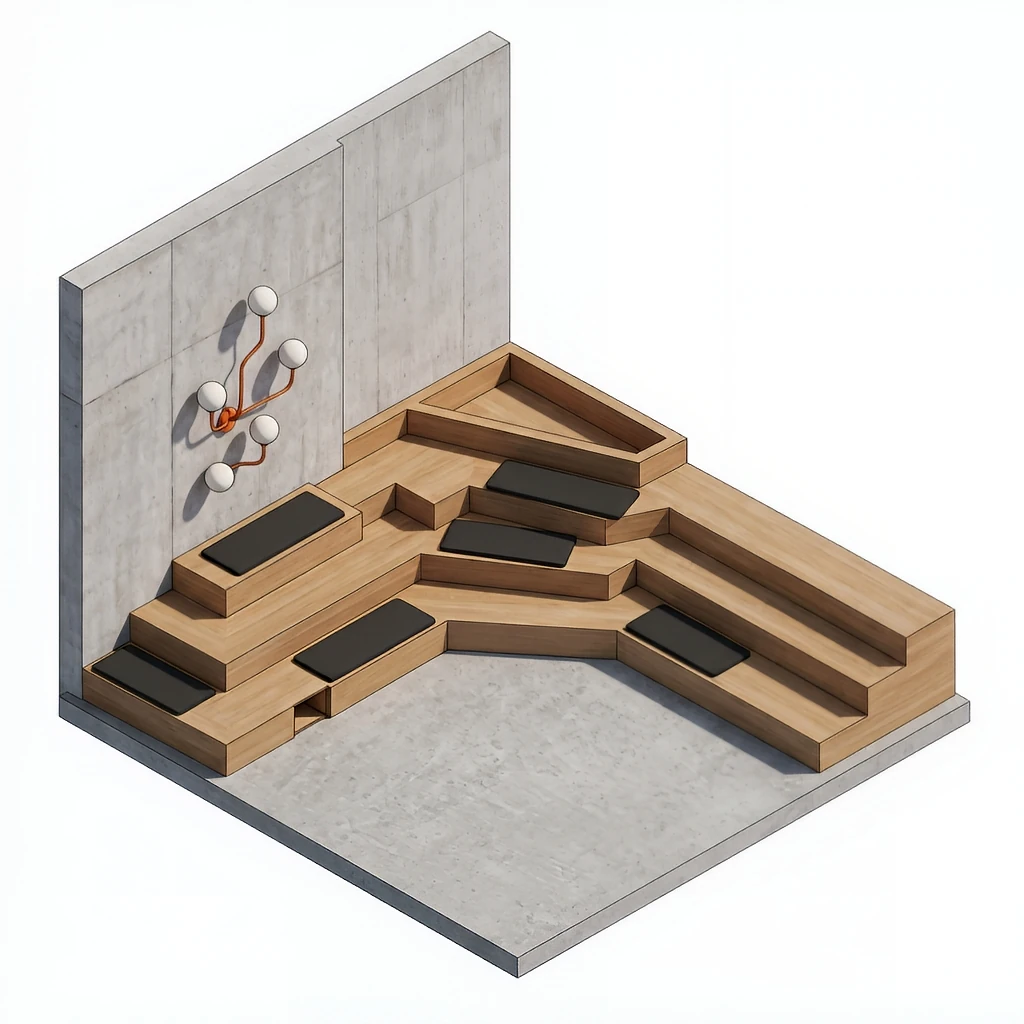
Where something is undecided, the image should say so rather than guess. A grey volume where the joinery has not been resolved is more useful, and more trustworthy, than a confident render of a design that will change.
Interactive when it earns its place
Walkthroughs and configurators are powerful for the right project, a large development or a flexible fit-out, and a waste on a single small space. We recommend the format that matches the decision the viewer is making, not the one that demos best.
The decision is easier if you start from the viewer. A buyer choosing between two apartments needs to understand the layout and the light, which a handful of well chosen stills will do better than a walkthrough. An operator deciding between three fit out options needs to compare, which is a set of matched views from an identical angle. An investor needs scale and context, which is often a single image of the whole thing in its setting.
The format that almost always disappoints is the one commissioned because it sounded impressive. Interactive tools have a real cost in production and a real cost in attention, and they pay back only where the viewer genuinely has something to configure.
Settle materials on screen, not on site
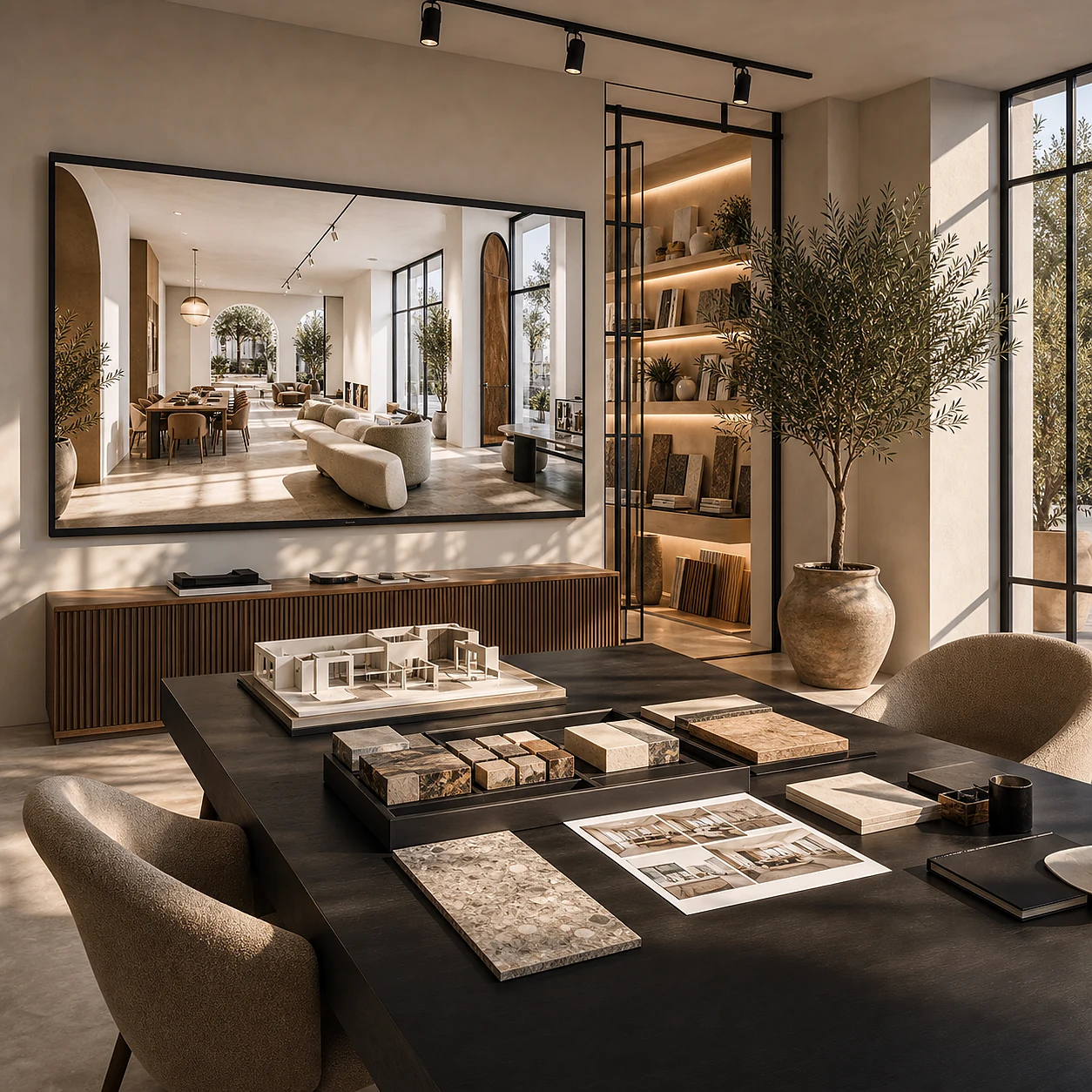
The expensive place to change your mind about a stone or a joinery finish is on the building. The cheap place is in the model. A serious visualization process doubles as a material decision process, and that is often where it pays for itself.
The way to get that value is to run the visualization while the decisions are still open, not after sign off. Images produced to confirm a finished design are a marketing expense. Images produced to test three options are part of the design process, and they usually cost less than one change order on site.
It works best when the person making the images and the person making the design are talking. A visualiser handed a finished package can only render what is there. One involved in the decision can show the two versions that would settle the argument.
What separates a useful brief from a slow one
Most delay in visualization comes from ambiguity rather than complexity. A brief that names the views, the time of day, the audience and the decision each image is meant to support moves quickly. One that asks for beautiful images of the project does not, because every round is a negotiation about something nobody wrote down.
The other half is material direction. Where the finishes are chosen, an image can be produced once. Where they are not, every revision is a material discussion conducted through pictures, which is the most expensive way to have it.
Where visualization earns its place in a sale
Off plan property is the obvious case, but it is not the only one. A hotel raising finance needs the concept to feel real to people who read spreadsheets. A retailer approving a rollout needs one room they can point at. An operator negotiating a lease needs to show a landlord what will be done to the space.
In each of those the image is doing a commercial job with a number attached. That is the right way to judge the spend: not against what images cost, but against the decision the image is being asked to settle.