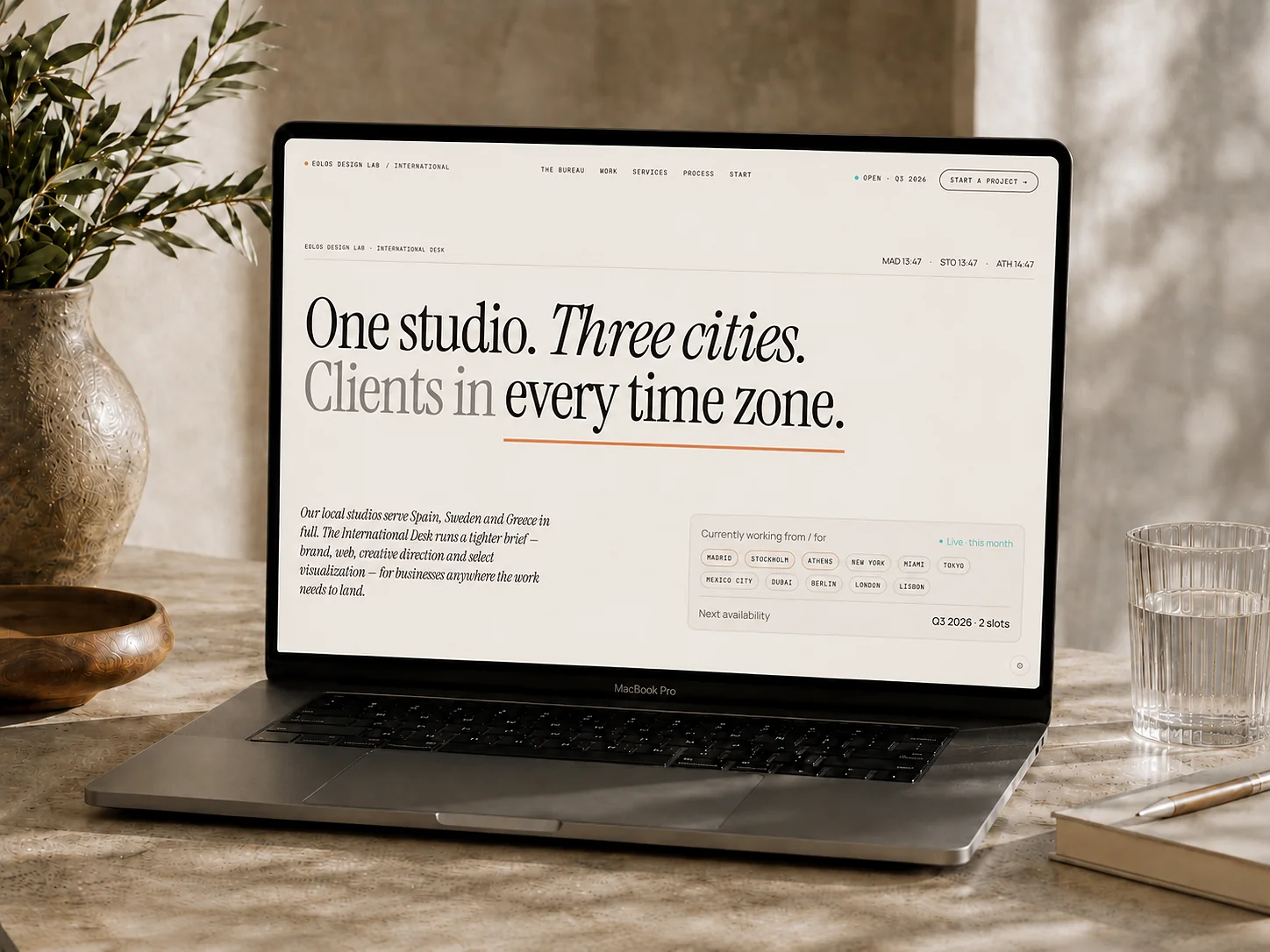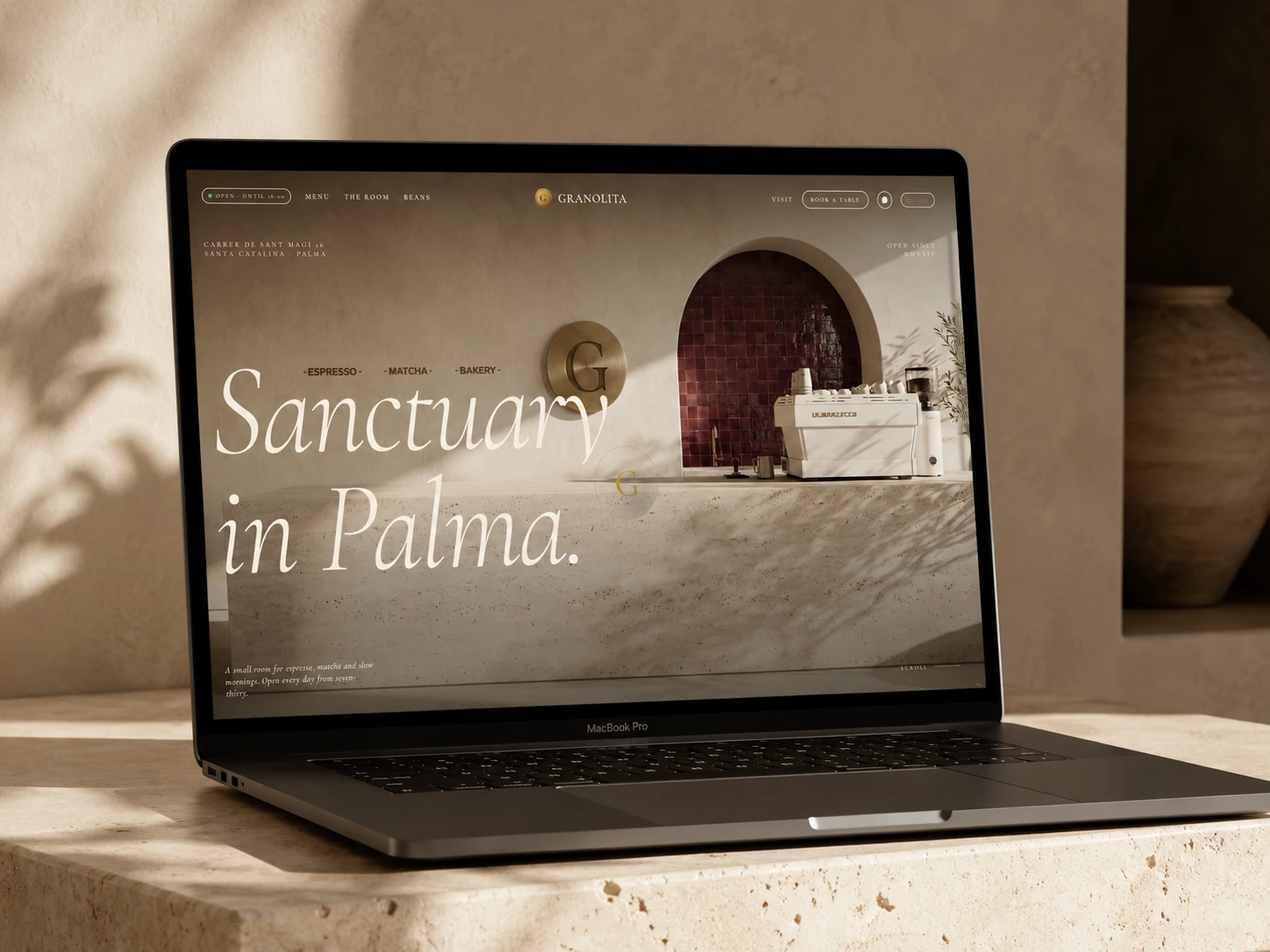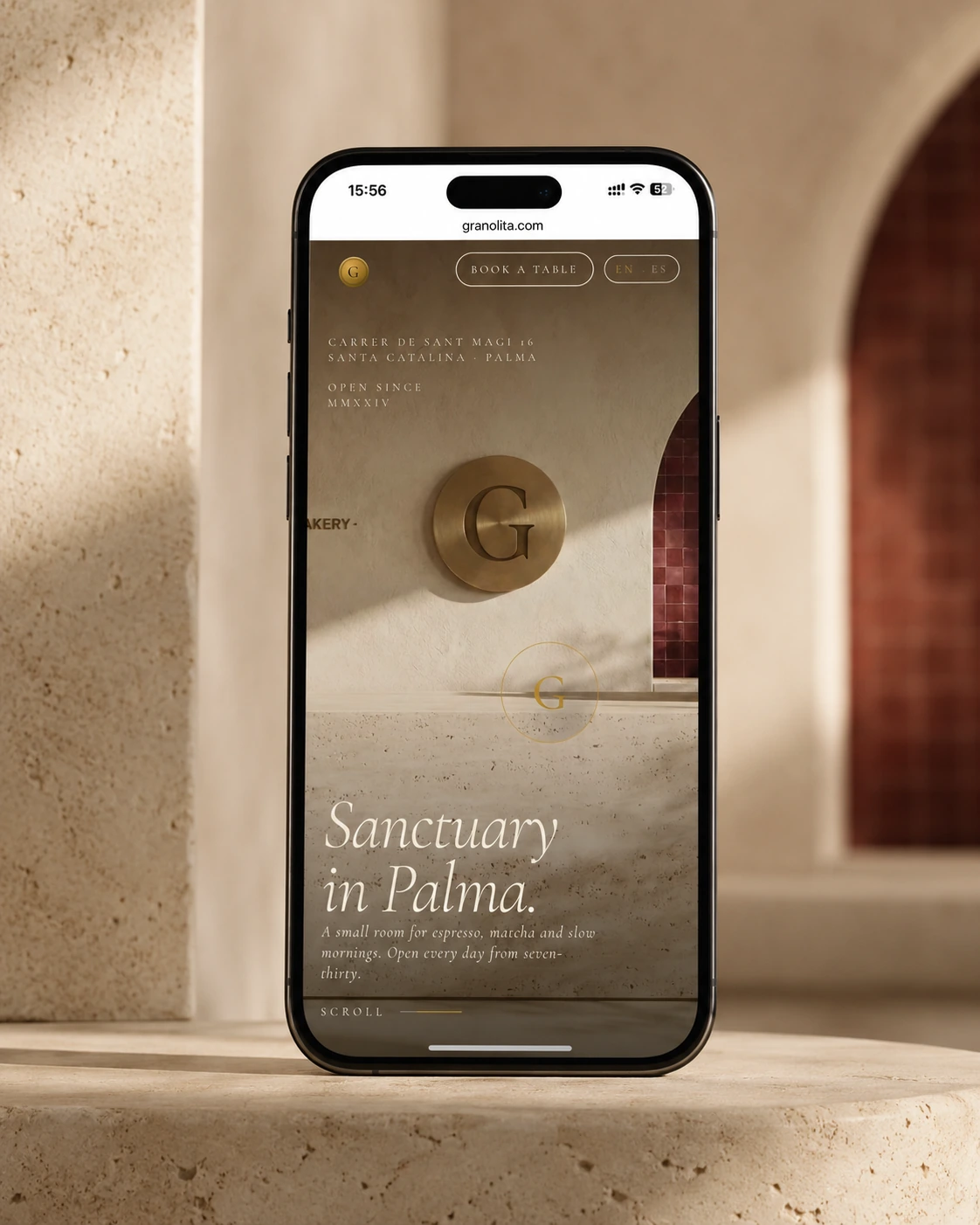
Property and hospitality brands often spend well on the building and badly on the website, then wonder why the enquiries feel thin. The site is where a stranger decides whether you are serious, and it is doing that in the first screen, usually on a phone.
Good web work here is not about more features. It is about a clear path from the first image to the moment someone asks to book or to view, with nothing in the way.
It helps to be honest about what the site is competing with. For a hotel it is a booking platform that has spent years removing every obstacle between a photograph and a payment. For a development it is a portal where a buyer can compare twelve schemes in an afternoon. You are not trying to out feature either of them. You are trying to be the place where someone who already likes the look of you can act on it.
Mobile first, because the decision is mobile
Most of your visitors arrive on a phone, often from a listing or a social post. If the site is slow, or the gallery fights the thumb, or the booking link hides, you lose people who were ready. Speed and a clean path are not polish, they are the product.
The gallery is usually where it breaks. Twenty images at full resolution, loading in order, on a connection that is not yours. A visitor sees three, waits, and goes back to the listing. Images sized for the screen they are viewed on, a layout that does not fight the thumb, and a page that is usable before every asset has arrived will do more for enquiries than any feature you could add.
Speed is also what the platforms measure. Slow pages cost you position in search and in maps, which means the fix pays twice: the people who arrive convert better, and more people arrive.
Show the space the way people decide
Property and hospitality are visual purchases. The site has to carry real photography and, where it helps, visualization, in a layout that lets the space breathe. Then it has to make the next step, book, enquire, register interest, impossible to miss.
What people look for is remarkably consistent, and it is rarely the thing sites lead with. Where exactly is it. What does the room or the unit actually look like, not the styled corner. What is nearby. What does it cost, or if you will not say, what range. A site that answers those four in the first two screens earns the enquiry. A site that makes a visitor hunt for them loses to the one that does not.
Where a space is not built yet, visualization does the work photography cannot. The rule is the same as for photography: it has to be honest. An image that oversells becomes a complaint at handover, and in property that complaint has a legal shape.
One brand from listing to inbox
A guest or buyer meets you across a listing, a site and an email thread. When those feel like one brand, trust compounds. When the website looks unrelated to the identity or the space, every handoff costs you a little confidence.
The email is the most neglected part of that chain. Somebody has just decided to trust you enough to send their details, and the reply they get is often a bare automated line from a system nobody has looked at in two years. It is the cheapest thing on this list to fix and one of the most visible.
Say who you are for, and who you are not for
Property and hospitality sites tend to describe everything as suitable for everyone. It reads as a fear of losing a lead, and it costs more leads than it saves. A hotel that says plainly it is built for couples and not for families has just made the decision easier for both. A development that states the buyer it was designed around will get fewer enquiries and close more of them.
This is a brand decision made visible on the website. It is also the part that cannot be added later by a copywriter, because it has to be true of the building.
Structure the site the way people search
A single page describing a whole portfolio will not rank for anything specific. A page for each property, each development, each location, each type of stay, gives search engines something exact to match and gives visitors a page that is actually about what they asked for.
The same structure is what AI assistants read when they answer a question about your market. Correct, consistent details across the site, the listing platforms and the map profile are what make an answer engine confident enough to name you. Inconsistency is what makes it hedge.