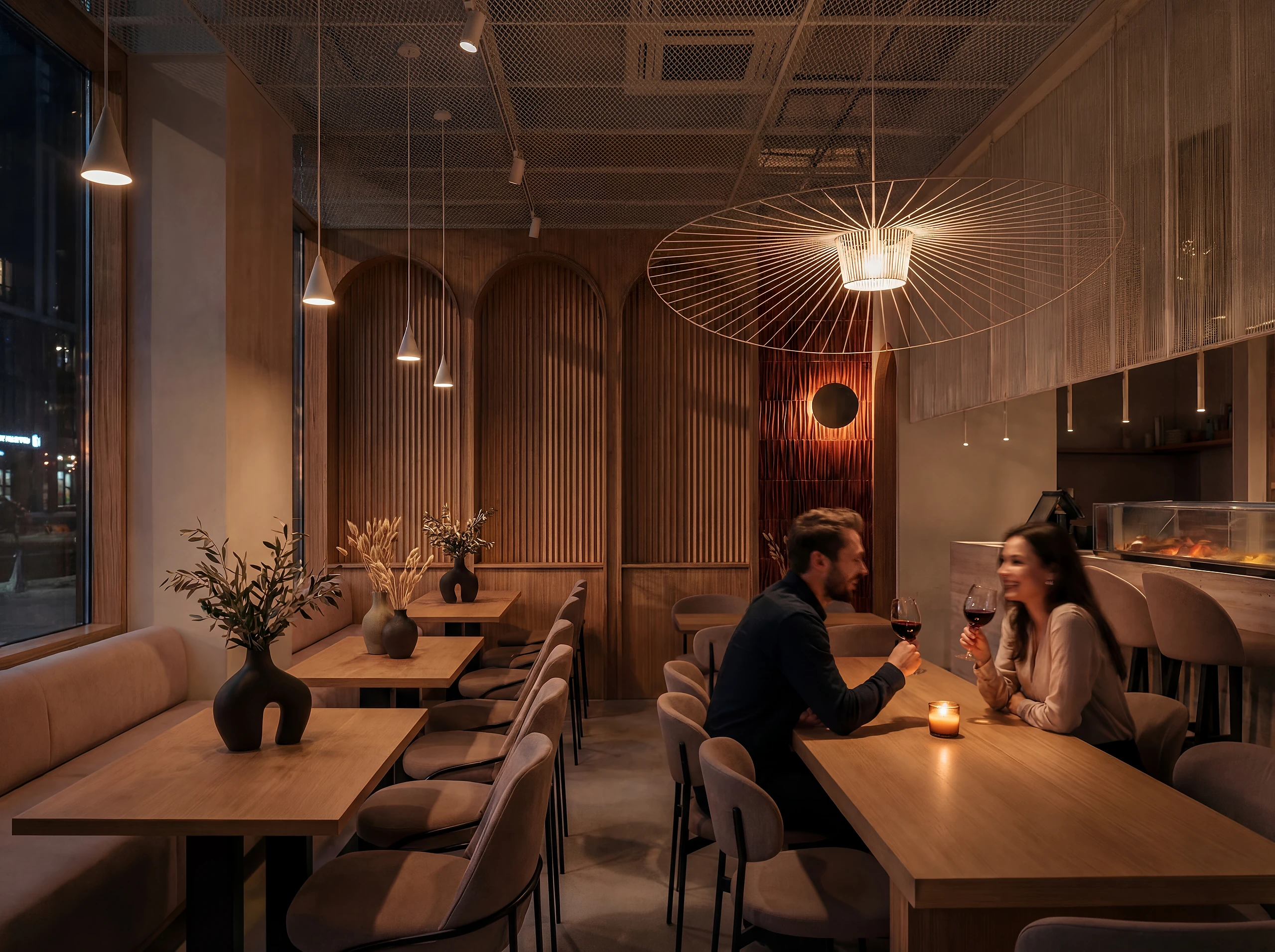
Restaurants are where the case for joined-up design is easiest to see. The name, the room, the menu, the signage, the playlist and the website are all met in a single visit, often within an hour. When they agree, the place feels like it means it. When they do not, the guest cannot say why it feels off, but they feel it.
This is the kind of work EOLOS was built to do: brand, space and web as one object, not three invoices.
Restaurants also punish the mistake faster than most businesses. A retailer with an incoherent brand loses a little margin over a year. A restaurant with a room that contradicts its menu finds out in the first month, in reviews written by people who cannot say what was wrong.
Start with the story, not the sign
Before a logo or a light fitting, decide what kind of evening this is and who it is for. Every later choice, the typeface, the chair, the plate, the tone of the website, should be answerable to that one idea. That is what makes a restaurant feel authored rather than assembled.
The story has to be answerable in operational terms, not only in adjectives. If the idea is a neighbourhood place people come to twice a week, that decides the price point, which decides the covers you need, which decides the table plan, which decides the size of the kitchen. If the idea is an occasion, almost every one of those numbers changes.
Restaurants that skip this usually discover the contradiction at the worst moment: a dining room designed for lingering, with a menu priced for turning tables twice.
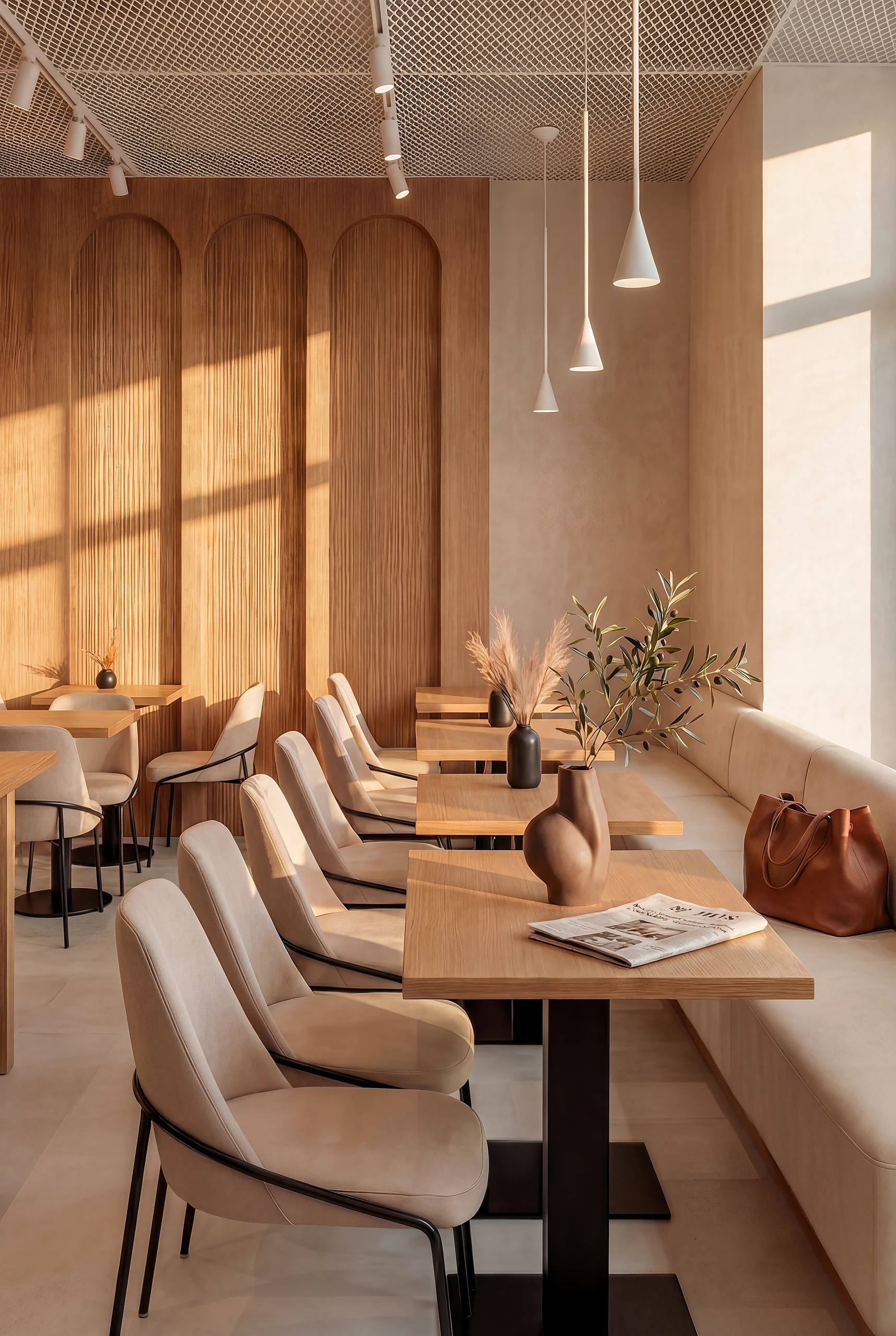
The room and the identity are the same argument
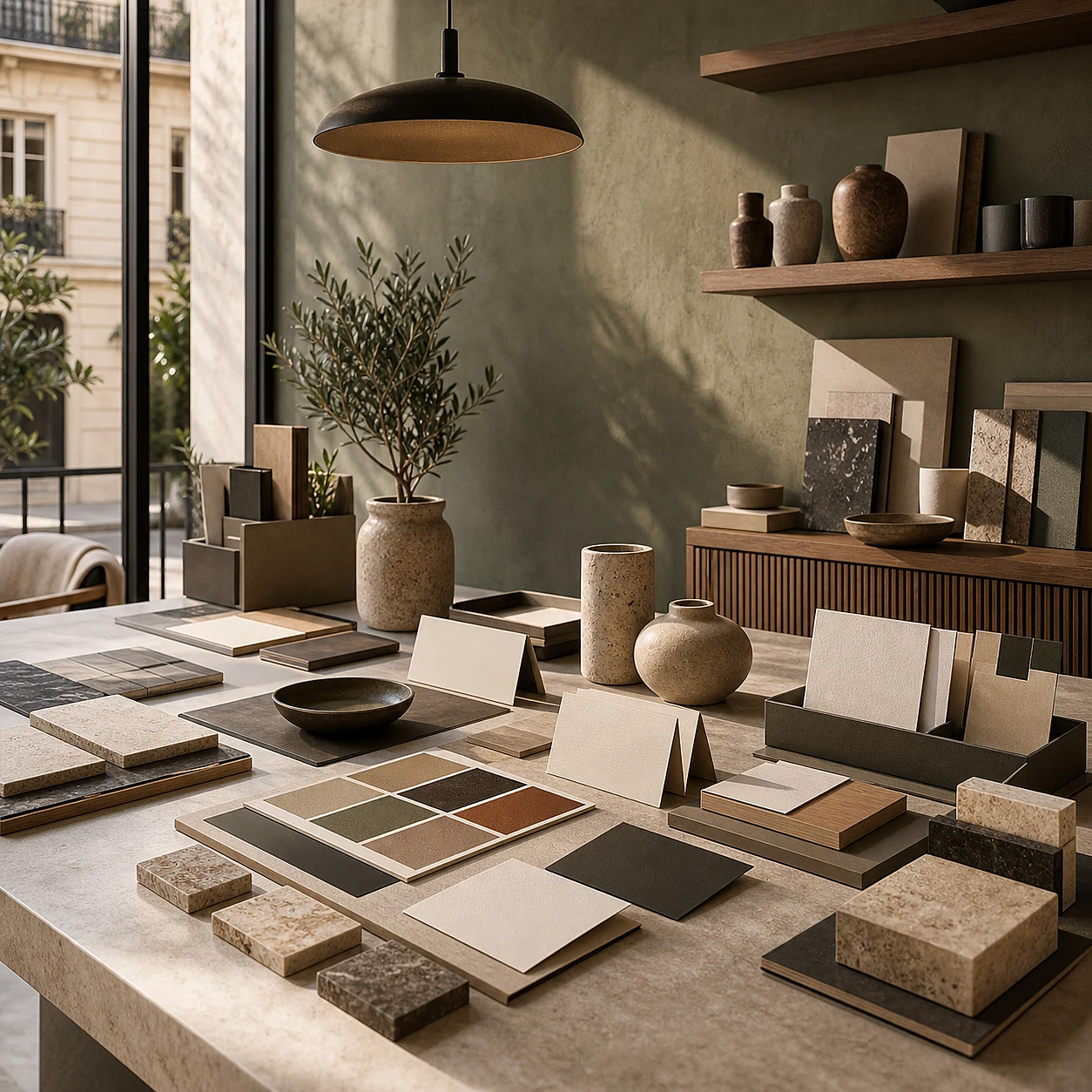
The material of the menu should relate to the material of the table. The tone of the signage should match the tone of the space. None of this is expensive to get right if it is decided together, and all of it is expensive to fix later if it is not.
The room also has to work for the people in it eight hours a day. The distance from the pass to the furthest table, where clearing happens, where the service station sits, whether two people can cross behind the bar at the busiest moment: these decide whether service feels calm or frantic, and the guest reads that atmosphere as part of the brand whether or not anyone intended it.
Acoustics belong in the same list. A room that is too loud is the most common complaint in hospitality and one of the hardest to fix after opening, because the solutions are in the ceiling, the soft surfaces and the plan.
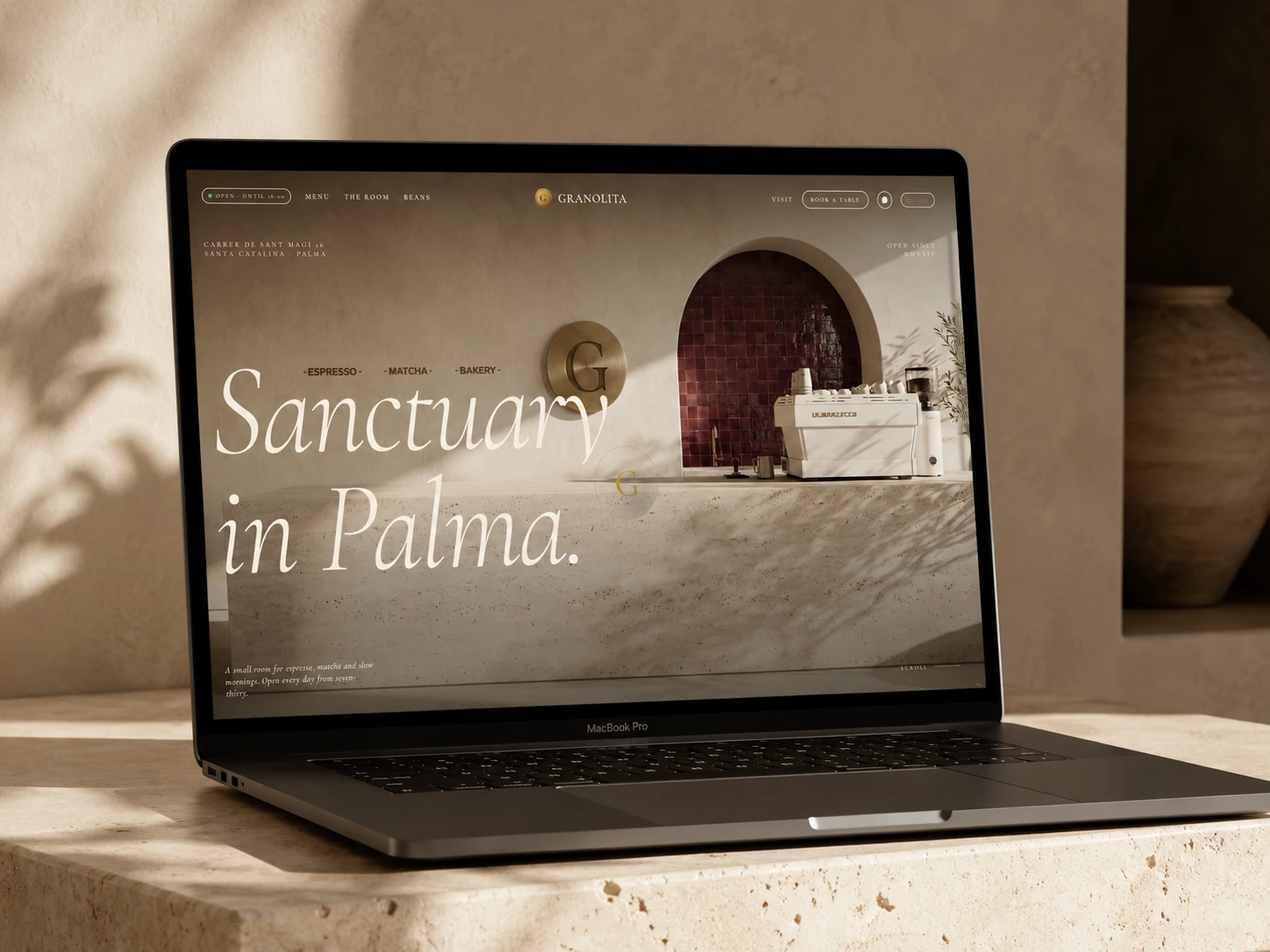
The website closes what the room opens
Most guests meet the restaurant online first. The site has to carry the same feeling as the room and make booking effortless. A beautiful room with a broken booking page is a table left empty.
The chain is longer than the website. A guest finds you on a map, reads three reviews, looks at photographs taken by strangers, checks whether you are open, and only then reaches your site. Every one of those touchpoints carries your brand and most of them are not under your control. What is under your control is that the information is correct and consistent everywhere it appears, and that the photographs you do own are good enough to set the standard.
What the menu is doing
The menu is the only brand asset a guest holds in their hands, and it is usually the last thing designed. Its material, weight, typography and structure say as much about the price of the evening as the room does, and they say it at the moment the guest is deciding how much to spend.
Structure matters as much as style. What a guest reads first, how many choices they face, where the eye rests, whether prices are lined up in a column that invites comparison: these are design decisions with a direct effect on average spend, and they belong with the identity rather than with the printer.
Designing for the second year
Opening night is not the test. A restaurant has to look intentional after two winters of wet coats, daily cleaning and furniture moved a thousand times. Materials that mark, finishes that cannot be repaired in sections and fittings sourced for one off charm are the ones that age a room fastest.
The brand has the same problem in a different form. A concept built entirely on a moment in taste will need replacing when that moment passes. One built on a genuine idea about the place, the food and who it is for can be refreshed rather than redone.